CLEAR WORDS
ON BALANCING
This is how you show your customers the value of balancing.

We wanted to know: What do drivers actually understand by "wheel balancing"? We asked them – and the answers were as insightful as they were amusing. While we professionals think of smooth running, the customer often has a blank stare or starts guessing creatively. One respondent put it perfectly:
"No idea what that's supposed to be. It's just annoying that it's charged every time the tires are changed without being asked!"
For most laypeople, balancing is an abstract mystery with no recognizable added value, and that's exactly why they often feel "ripped off" when they look at the bill.
Customer ignorance is not an obstacle, but a perfect opportunity. If you turn an annoyed "not again..." into an "ah, that makes sense!", you're not selling weights, but safety and driving comfort. With the right arguments, you win your customers' trust and increase your turnover in the long term.
Explain the benefits, score on the invoice.
"Is this necessary?"
"Can we do it without?"
“Without balancing, you put unnecessary strain on shock absorbers and wheel bearings. Braking distances increase because ABS and ESP cannot work optimally.
My recommendation: Balancing with every change.”
• Direct expert statement
• Safety concerns
"Why am I being charged extra for this?"
"Are you just trying to sell me something?"
“Balancing costs you only about €10 per wheel. Without this check, you risk uneven wear and tear. Balancing is the cheapest method to prevent costly consequential damage.”
• Hard facts instead of persuasion
"What is that anyway?"
"I've never heard of that."
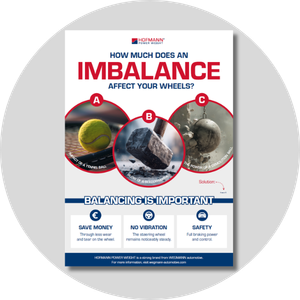
“Imbalances are small weight differences in the wheel. What is just a slight vibration at 50 km/h hits like a sledgehammer at 100 km/h.”
• Simple language, no jargon
• Concrete consequences everyone understands